Written by Vinod Saini — SEO Strategist & Education Content Specialist with 15+ years of experience helping students, parents, and education brands navigate career decisions in India’s evolving job market. Vinod Saini has worked with sports institutes, EdTech platforms, and career counselling firms across Delhi NCR, Mumbai and Pune.
Every time you watch an IPL match, a Pro Kabaddi bout, or a city marathon — you’re seeing the result of hundreds of decisions made by people you never see on camera. Most people assume sports management means managing players. That single assumption causes thousands of passionate sports fans to miss careers they’d genuinely love.
The field is hard to define cleanly because it sits at the intersection of business, law, media, marketing, and operations — all at once. There’s no single job title that captures it.
By the end of this post, you’ll know exactly what sports management is, which career paths it opens, what skills actually matter, and how you can realistically break into this field from India — backed by current market data and practical guidance.
Sports Management Is Bigger Than You Think
What is sports management? Here’s a clean, direct answer:
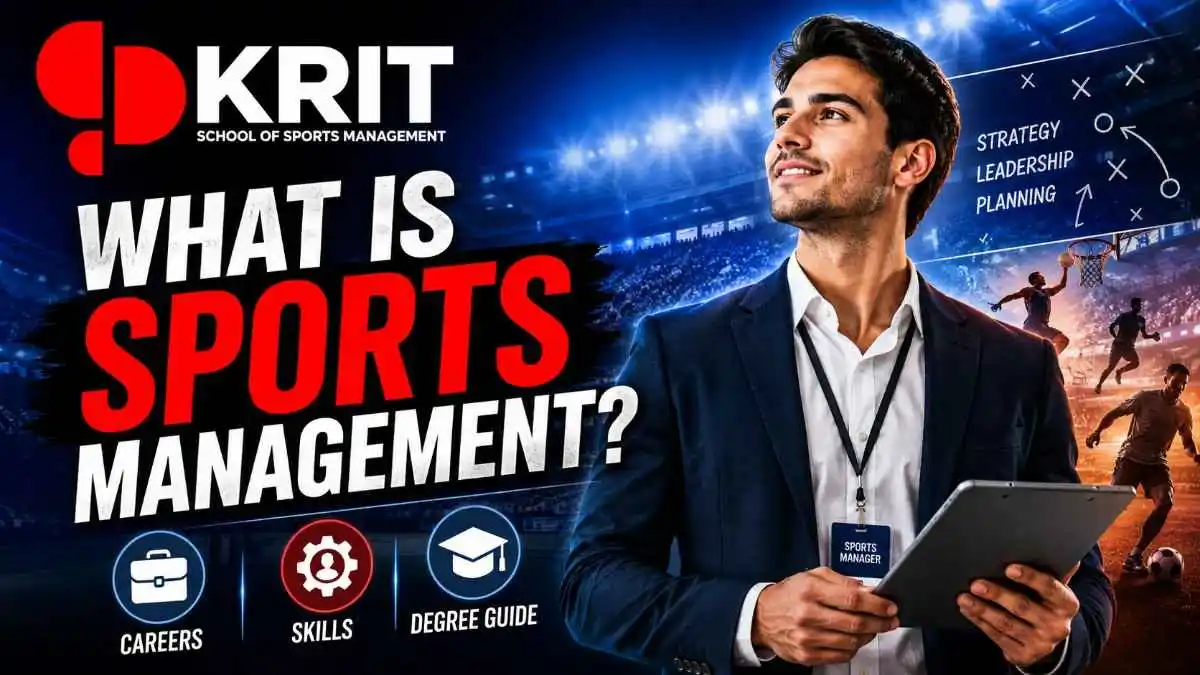
Sports management is the business and operational side of the sports industry. It encompasses the strategic management of sports leagues, franchises, athlete branding, event logistics, legal compliance, and media rights distribution.
That definition covers a lot of ground — intentionally. Think of it this way: athletes play the game. Sports managers run it.
Every IPL franchise, every national federation, every stadium you’ve ever visited has a full team of sports management professionals handling the commercial, administrative, and operational work that makes the fan experience possible.
Why India Is Waking Up to Sports Management
India’s sports industry is no longer just cricket. According to a KPMG–FICCI report, India’s sports sector was valued at approximately ₹16,000 crore and is projected to grow at a CAGR of 12–15% over the next five years, driven by multi-sport league expansion, OTT broadcast rights, and government spending under the Khelo India scheme.
The IPL alone generated an estimated ₹15,766 crore in brand value in 2024. The Women’s Premier League launched in 2023 with a franchise rights auction totalling ₹4,669 crore. The ISL, Pro Kabaddi League, and Prime Volleyball League are adding new franchises and broadcast deals every season.
That’s not hobby money. That’s industry money — and it needs trained professionals to manage it.
Is Sports Management a Good Major?
Short answer: yes — if you go in with clear expectations.
A sports management degree doesn’t train you to play sport. It trains you to run the business of sport. You’ll study finance, marketing, human resources, event planning, and legal fundamentals — all applied specifically to the sports context.
The degree suits you well if you’re genuinely interested in both sport and business strategy. If your passion is purely athletic performance, a sports science or coaching qualification serves you better.
What Does a Sports Management Degree Actually Cover?
A well-structured sports management program covers:
- Sports Marketing & Sponsorship — how teams attract brand partners and monetize fan bases
- Sports Law & Ethics — player contracts, IP rights, anti-doping compliance
- Event & Facility Management — end-to-end logistics, venue operations, crowd safety
- Sports Finance — revenue models, salary cap structures, budgeting
- Media & Communication — broadcast rights, digital strategy, content planning
- Sports Analytics — performance data, audience segmentation, business intelligence
In India, programs worth researching include IISM (International Institute of Sports Management, Mumbai), Symbiosis School of Sports Sciences (Pune), Krit School of Sports Management, Amity University, and MICA Ahmedabad for the marketing specialization. Internationally, Loughborough University (UK), Ohio University (US), and Deakin University (Australia) consistently rank among the strongest programs.
Before you apply to any program: Check three things specifically — placement rate, industry partnerships, and alumni accessibility. A degree’s value lives mostly in those three factors.
Career Opportunities After a Sports Management Degree
The career paths are more varied than most people expect. Here’s a realistic breakdown of the major roles.
Sports Marketing Manager
A sports marketing manager builds the commercial identity of a team, league, or sports brand. They design campaigns, negotiate sponsorship activations, and manage digital fan engagement.
Core responsibilities:
- Developing seasonal marketing campaigns for teams and events
- Managing sponsor deliverables and measuring activation ROI
- Running social media content calendars and influencer partnerships
- Tracking fan engagement metrics and reporting to leadership
Sports Facilities Manager
A facilities manager ensures that stadiums, training grounds, and sports complexes run safely, efficiently, and within budget.
Core responsibilities:
- Overseeing maintenance schedules, vendor contracts, and safety audits
- Managing event-day operations, crowd flow, and staff coordination
- Budgeting for equipment upgrades and infrastructure improvements
- Ensuring compliance with national safety and accessibility standards
Sports Event Coordinator
Event coordinators manage the complete lifecycle of sports events — from a city 10K run to a national championship.
Core responsibilities:
- Booking venues, securing permits, and managing logistics timelines
- Coordinating volunteers, ground staff, and broadcast crews
- Liaising with sponsors, athletes, and municipal authorities
- Conducting post-event analysis and cost reconciliation
Key Responsibilities of a Sports Administrator
Sports administrators work inside governing bodies, national federations, school sports programs, or club management structures.
Core responsibilities:
- Managing organizational budgets, grants, and funding applications
- Implementing athlete development and grassroots program logistics
- Coordinating compliance with federation rules and government policy
- Acting as the operational link between athletes, coaches, and leadership
Sports Agent Career: Roles, Skills, and Opportunities
A sports agent represents athletes in contract negotiations, brand endorsements, and career decisions. It’s one of the most competitive but financially rewarding paths in the field.
Core responsibilities:
- Negotiating player contracts with IPL franchises, ISL clubs, or international teams
- Securing and managing endorsement and licensing deals
- Advising athletes on career transitions, media appearances, and public positioning
- Handling legal and financial administration for the athlete’s professional portfolio
In India, the formalization of player agencies within BCCI structures and ISL regulations has created legitimate, structured pathways in this space that simply didn’t exist a decade ago.
Sports Public Relations Specialist
PR specialists manage the reputation and media presence of athletes, teams, or sports organizations.
Core responsibilities:
- Writing press releases, media advisories, and athlete statements
- Managing media accreditations and organizing press conferences
- Leading crisis communication when controversies or injuries arise
- Building sustained relationships with journalists and broadcast outlets
If one of these roles resonates with you: Start building relevant experience now. Volunteer at local tournaments, intern with a sports marketing agency, or approach your state-level sports association. Entry-level access in Indian sports is more available than most people realize — you just have to ask.
How Do I Become a Sports Manager?
There’s no single route, but here’s a practical sequence that consistently works.
Step 1: Build the Right Academic Foundation
A bachelor’s or master’s degree in sports management, sports administration, or a business-related field with a sports specialization gives you the credential and the conceptual framework employers expect. In India, look for programs with mandatory internship semesters.
Step 2: Get Real-World Experience Before You Graduate
Internships convert theoretical knowledge into applied skill. Target sports clubs, event management firms, sports marketing agencies, or state sports bodies. The Indian sports ecosystem — from cricket associations to athletics federations — runs on thin staffing, which means interns often get substantive responsibilities quickly.
Step 3: Build a Hybrid Skill Set
Hard skills that move the needle:
- Data analysis using Excel, SQL, or tools like Tableau for sports analytics and audience insight
- Digital marketing: SEO, paid campaigns, social media management
- Budget and contract management basics
Soft skills that close deals:
- Negotiation and active listening
- Staying composed during high-pressure live events
- Relationship management across athletes, sponsors, and media
Step 4: Network with Intentionality
Sports business runs on relationships. Attend FICCI sports forums, Sports Business Summit events, and follow key professionals on LinkedIn. Engage with alumni from your program. Most of the best opportunities in Indian sports management are filled before they’re publicly advertised.
Step 5: Add Targeted Certifications
Short certifications from platforms like Coursera, edX, or NASSM supplement your degree and signal specific skills to employers. Sports analytics courses, digital marketing certifications, and event management diplomas all add visible credibility to your profile while you’re still building experience.
Current Trends Reshaping Sports Management
The field is changing fast. Here’s what’s actively defining the next generation of sports management careers.
Sports analytics has become non-negotiable. Teams at every level — from IPL franchises to national athletics programs — now make data-driven decisions on player acquisition, ticket pricing, and fan content strategy. Professionals who can work with analytical tools like Python, SQL, and Tableau to interpret player performance data and audience behavior metrics are commanding significantly higher salaries and more senior roles.
Esports and competitive gaming have created an entirely new category of management careers — team operations, broadcast production, sponsorship sales, and event management for gaming leagues. The Indian esports market crossed ₹1,100 crore in 2024 and is growing fast.
Women’s sports is a genuine growth sector. The WPL franchise auction in early 2023 — at ₹4,669 crore total — signaled that institutional investment in women’s sports in India is real and scaling. This opens specific openings in marketing, broadcasting, community management, and event operations for those who position early.
Athlete personal branding has fundamentally changed what sports agents and PR managers do. Athletes with strong social media presence now operate as independent media entities, and sports managers who understand content strategy, influencer dynamics, and platform algorithms are in exceptionally high demand.
Sustainability requirements are now part of major event planning. Stadium operators and event coordinators increasingly need to integrate carbon offset planning, waste management protocols, and sustainable sourcing into their operations — particularly for government-funded events.
Conclusion
Sports management is the engine that powers every organized sporting experience — from an IPL mega-auction to a school district athletics program. It combines business strategy, marketing, operations, and media into one field that rewards people who bring both passion and professional discipline.
What is sports management in practical terms? It’s the work that makes athletic competition commercially viable, operationally smooth, and culturally meaningful. And in India right now, with a sports economy growing at double digits, the timing to build a career in this field is genuinely favorable.
The roles are real, the salaries are competitive, and the pathways — through education, internships, and strategic networking — are more accessible than most people assume.
Your next step is specific: Identify one role from this article that fits your strengths, research one Indian institution offering a relevant program, and send one LinkedIn connection request to someone already working in that niche. Career momentum starts with concrete action, not more research.
Frequently Asked Questions
1. What is sports management in simple terms?
Sports management is the business and operational side of the sports industry — covering the strategic oversight of sports leagues, franchises, events, athlete branding, legal compliance, and media rights. It’s the profession that ensures sporting organizations run efficiently, commercially, and sustainably. If athletes perform the sport, sports managers run the infrastructure that makes the sport possible at scale.
2. Is sports management a good major for students in India?
Sports management is a strong major in India right now, given the rapid expansion of professional leagues like IPL, ISL, and the WPL, plus the government’s Khelo India investment push. The degree makes the most sense if you combine it with active internship experience and networking. Graduates who enter with both a credential and hands-on portfolio consistently outperform those who rely on academics alone.
3. What skills do I need to build a career in sports management?
You need a working combination of business skills — marketing, data analysis, finance basics — and strong interpersonal abilities including negotiation, communication, and relationship management. Technical skills in digital marketing, sports analytics tools like Tableau or SQL, and contract management are increasingly expected at entry level. Comfort with working under live-event pressure is a practical differentiator most hiring managers mention specifically.
4. What are the highest-paying jobs in sports management?
Sports agents, franchise general managers, and sports marketing directors consistently rank among the highest-earning roles in the field. In India, senior positions within IPL franchise management, OTT sports content strategy, and media rights negotiation at broadcasters like Star Sports or JioCinema offer strong earning potential for experienced professionals with proven commercial track records.
5. How do I break into sports management without a formal degree?
You can build a credible sports management career without a traditional degree by accumulating hands-on experience through internships, event volunteering, and targeted short courses in sports marketing, event management, or analytics. Building a strong work portfolio — even from grassroots or college-level sports work — combined with active professional networking and niche expertise in a growing area like esports or women’s sports PR, opens real doors in the Indian market.
6. What are the current trends in sports management professionals should watch?
The most significant current trends in sports management include the mainstreaming of sports analytics (with tools like Python, SQL, and Tableau now standard), the rise of esports as a legitimate management career track, the commercial expansion of women’s sports in India, and the growing demand for professionals who combine athlete personal branding with content strategy expertise. Sustainability planning for events is also becoming a required competency, not an optional one.