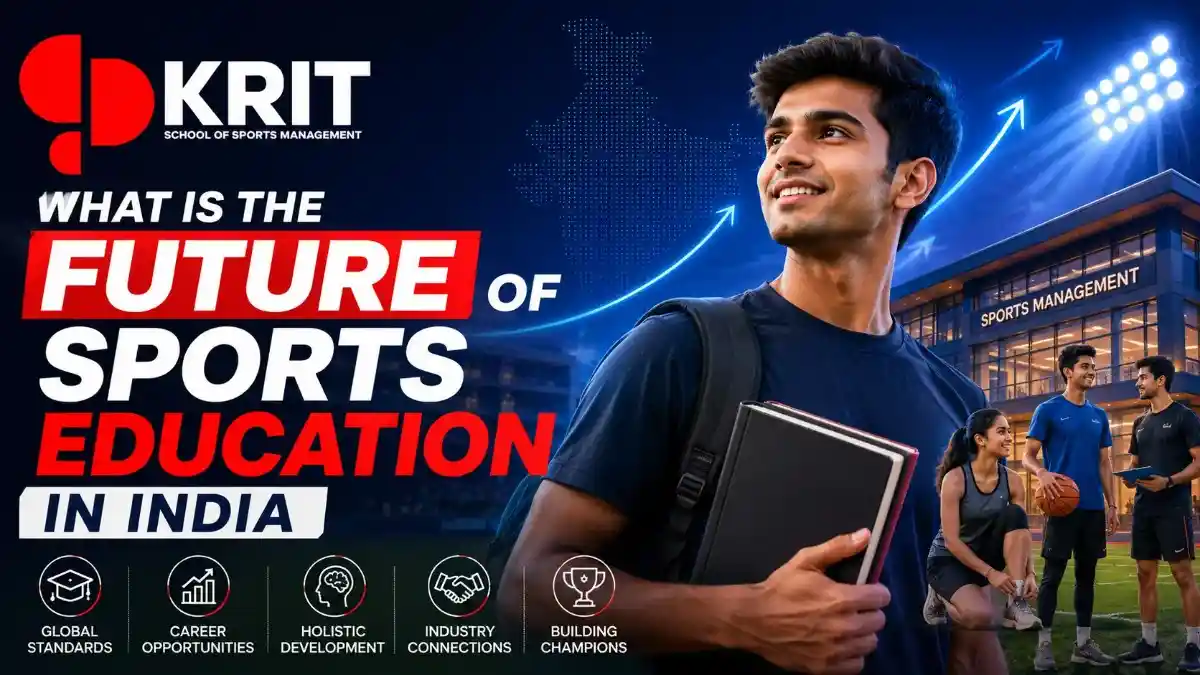
The Indian sports industry is witnessing a substantial change. Recently, the movement of sports to a thriving business sector is attributable to the rise of professional leagues, increasing corporate investments, and a surge in fan engagement.
This change is positively impacting the future of sports education in India as well as providing many career options for students who are interested in working in the sports industry beyond being an athlete. With continuous growth and development of the industry, several new career options in the sports industry have been introduced, which, on one hand, are increasing the relevance of sports education and opening new doors of opportunities.
Why Sports Education Is Evolving
Sports education has expanded well beyond coaching and physical development. The modern sporting landscape demands the ability to plan and manage events, create marketing plans, seek out sponsor partnerships, and use performance analysis tools. Also, professionals who can communicate through the various digital media channels will have an edge as well.
Schools are constantly modifying their programs to suit the changing needs of the market in the best way possible. They are overall running sports programs that include elements of business and management majors. This helps the students acquire their skills through practical experience at the same time as they learn the theoretical basis behind the functioning of the sports industry.
Adoption of Industry-Relevant Learning
Today’s sports education focuses first and foremost on hands-on learning methods like internships, live projects, workshops, and industry interactions. Besides learning through doing, students have the opportunity to build their self-assurance through the activities and gain the first insights into the professional world with the help of their instructors.
Technology Is Shaping the Future of Sports Education
Technological development is fast becoming inevitable in the world of sports. Using athlete performance tracking, fan engagement, and data analytics, amongst others, technological development is having drastic effects on how sports management is done.
In order to stay ahead of changes taking place, colleges are now offering subjects such as sports analytics, digital marketing, content creation, and sports technology that will put learners ahead of others who may be in the industry and whose needs are always evolving.
The Rise of Data and Analytics
Sports organizations are increasingly relying on statistics to ensure they are able to get optimal results and understand fan trends. This has made the ability to manipulate numbers very important and provided entry for those interested in marrying technology with the world of sports.
Future Jobs in the Sports Industry
The expansion of sports has resulted in employment possibilities in a number of areas. Yet, these jobs are not sports careers in a traditional sense since they focus on the business, marketing, and operational areas of sports organizations.
Sports Marketing and Brand Management
Sports brands, teams, and leagues require staff who can conceptualize advertising campaigns, handle sponsorships and cultivate loyal fan bases. Without a doubt, sports marketing is the engine that drives audience participation and revenue generation.
Sports Analytics and Technology Positions
Sports analysts, performance data specialists, and sports technology consultants are the kind of personnel who are sought after in today’s world of sports because of the increased use of technology. Through their efforts, sports organizations are able to make well-informed decisions and improve operational efficiency.
Event and Operations Management
There is a continuing demand for qualified manpower to carry out the planning, logistical arrangements, and working aspects of the professional leagues, tournaments, and sporting events. Without any doubt, event management can be one of the most lucrative sports industry career paths.
Conclusion
The future of sports education in India looks extremely bright. Following the fast growth of the industry, the demand for professionals who combine knowledge and skills would significantly rise. The modern sports education system is no longer limited to physical training as the students become ready for various challenging occupations available in the sports market.
Irrespective of whether it is marketing analytics, event management, technology, or entrepreneurship, sports education is enabling access to career opportunities that were a source of fantasy only a few years back. Students who love sports and are willing to lay the foundation of the right education today shall have countless doors open for them tomorrow.
Start Your Journey with Krit
Make a vocation for yourself in sports beyond the gameplay with Krit School of Sports Management. Attain theoretical knowledge supplemented with industry orientation, learn by actually doing sports projects that will help you become the sports industry professional of tomorrow. See what Krit has to offer with cutting-edge courses and make your dream of a sports career a reality.
FAQs
1. What is the future of sports education in India?
There is immense potential for sports education in India because of the expansion of the sports industry. There are several career options in areas like management, marketing, sports analytics, technology, and event management.
2. What careers can I pursue with a sports management degree?
A sports management degree provides scope in careers such as sports marketing, sponsorship management, event management, operations, and sports analytics. You can join sports organizations as well as companies involved in the industry.
3. How does technology impact the field of sports education?
There is an increasing need for skills like data analytics and digital marketing as the use of technology increases in the industry. The modern sports education curriculum reflects this need.
4. Why should I opt for Krit School of Sports Management?
Krit School of Sports Management ensures a combination of theoretical knowledge and hands-on experience within the industry. Students develop industry-ready skills through various projects.