Learning by Doing: Development of Skills and How KYG and Goal Rush Turn Sports Management Students into Future Professionals
You can study event management in a classroom. You can learn about marketing from a textbook. You can understand operations through a lecture. But what happens when you are given the responsibility of making an actual event happen?
That is where the real learning begins.
At Krit School of Sports Management, we believe that education should go beyond theoretical knowledge. Students should have the opportunity to apply what they learn, make decisions, solve problems, work with people, and understand what it takes to deliver an experience successfully.
This belief lies at the heart of Krit’s experiential learning approach: learning by doing.
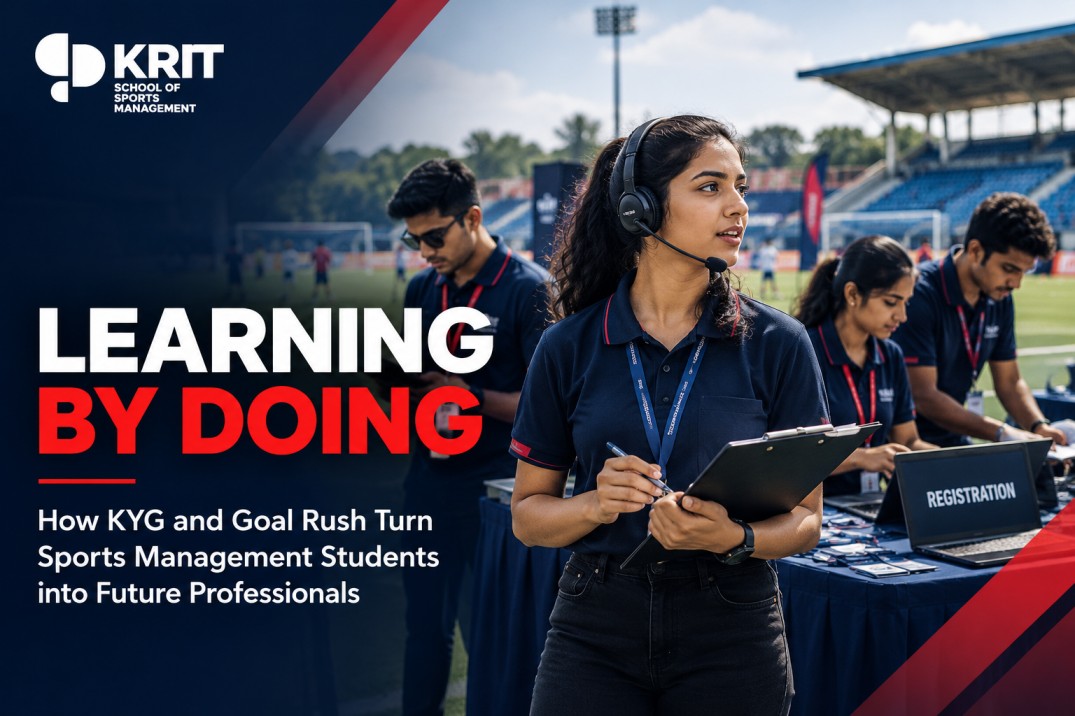
Through initiatives such as the Krit Youth Games (KYG) and Goal Rush, Krit gives students the opportunity to step into the world of sports management, take ownership of real responsibilities, and experience the challenges and rewards of organising sporting events.
These are not just events to participate in. They are opportunities to learn, experiment, collaborate, and grow.
KYG: Learning to Build a Sports Event from Scratch
The Krit Youth Games (KYG) was designed as a practical learning experience that allowed students to understand how a sports event is conceptualised, planned, organised, and executed.
Rather than simply learning about the different functions involved in event management, students had the opportunity to experience them firsthand.
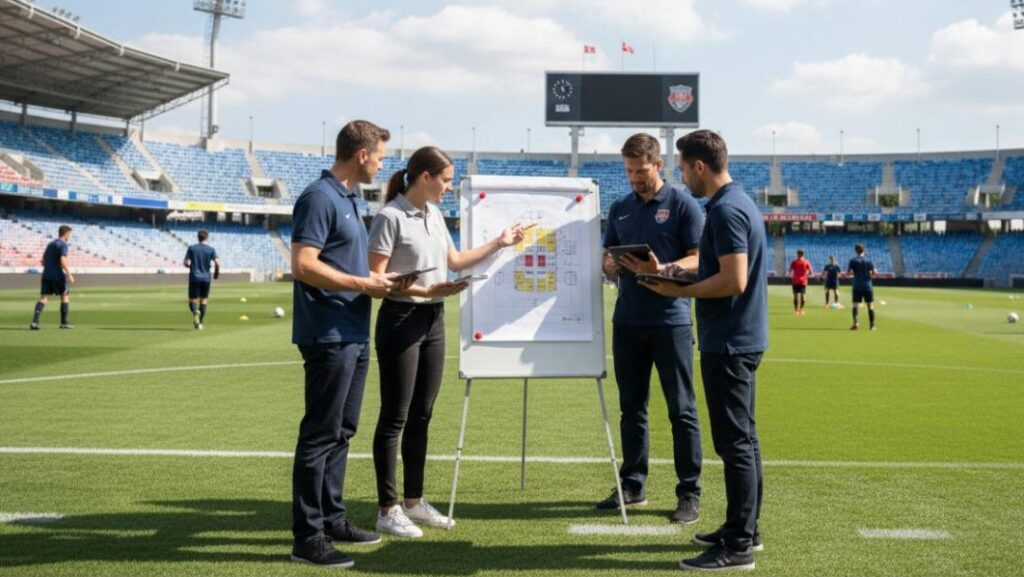
From planning activities and coordinating logistics to promoting the event, managing operations, and working together as a team, KYG exposed students to the many moving parts that come together to create a sporting event.
The real classroom was the event itself.
Goal Rush: Putting Learning into Action Once Again
Building on the same philosophy, Krit students will take on the responsibility of organising Goal Rush, a penalty shootout tournament.
They also need to consider how the event will be documented, how its story will be communicated, and how the experience can be used to showcase their work as aspiring sports management professionals.
Every decision has a purpose. Every responsibility carries a lesson.
What happens when registrations do not go as planned? How should a team respond when an operational challenge arises? How can participants be kept engaged? What makes an event memorable for its audience?
These are the kinds of questions students begin to understand when they move from discussing an event in theory to organising one in practice.
The value of experiential learning lies in the skills students develop while working through real responsibilities and challenges.
- Planning and Organisation
An event cannot succeed through enthusiasm alone. It requires structure, timelines, clear responsibilities, and attention to detail.
By working on KYG and Goal Rush, students get to understand how an idea is broken down into actionable tasks, how deadlines are managed, and how different activities must be coordinated.
They learn to think ahead, anticipate challenges, and understand the importance of preparation.
- Teamwork and Leadership
Sports events bring together people with different responsibilities, ideas, and working styles.
Students learn to collaborate, communicate expectations, delegate tasks, and support one another. They also get opportunities to take ownership of responsibilities and understand what it means to be accountable to a team.
Leadership becomes more than a concept discussed in class. It becomes a responsibility that must be practised.
- Marketing and Audience Engagement
A sporting event needs participants, attention, and an audience that has a reason to care.
Students can apply marketing concepts by creating promotional content, communicating event details, building excitement, encouraging registrations, and engaging their networks.
They begin to understand that event marketing is not simply about putting out posters or social media posts. It is about reaching the right audience and giving people a reason to participate.
- Operations and Problem-Solving
Even the most carefully planned event can present unexpected challenges.
Equipment may need to be rearranged, schedules may require adjustments, and teams may need to respond quickly to changing circumstances.
These situations teach students to think on their feet, communicate effectively, prioritise tasks, and find practical solutions.
They also learn an important professional lesson: preparation matters, but the ability to adapt matters just as much.
- Communication and Stakeholder Management
Organising an event involves communicating with participants, team members, venue representatives, collaborators, and other stakeholders.
Students learn the importance of clear instructions, timely follow-ups, professional communication, and managing expectations.
These skills are valuable not only in sports management but also across marketing, business development, operations, and event management careers.
- Content Creation and Portfolio Building
In today’s sports industry, the ability to execute an event is valuable. Being able to demonstrate and communicate that experience is valuable too.
Through event documentation, photography, videos, interviews, behind-the-scenes content, and post-event reporting, students can build a record of their work.
They can showcase the responsibilities they handled, the decisions they made, the challenges they encountered, and the outcomes they contributed to.
This creates an opportunity to build a practical portfolio that can support future internship applications, job interviews, and professional conversations.
Instead of simply saying, “I have studied sports event management,” a student can explain what they actually did, what they learned, and how they contributed to an event.
That is a meaningful difference.
Why Learning by Doing Matters in Sports Management
Sports management is a field where knowledge must translate into action.
Understanding the principles of event planning is important, but applying those principles requires judgement. Knowing how marketing works is useful, but creating a campaign and engaging an audience involves practical decisions. Understanding teamwork is one thing; working with a team under deadlines is another.
Experiential learning helps bridge this gap between knowing and doing.
When students take part in organising events, they have the opportunity to:
- Apply theory:Connect classroom concepts to practical responsibilities.
- Build confidence:Learn by taking ownership and making decisions.
- Develop professional skills:Practise communication, teamwork, leadership, and problem-solving.
- Understand industry realities:Experience the coordination and effort required behind the scenes.
- Reflect and improve:Identify what worked, what did not, and what they would do differently next time.
Not every decision will be perfect, and not every challenge will have an immediate solution. That is part of the learning process.
The objective is not simply to produce a flawless event. It is to help students become more capable, responsible, and reflective professionals through the experience of creating one.
From Participating in Sports to Managing Sports
A passion for sports can inspire someone to enter the industry. But building a career in sports management also requires the ability to organise, communicate, plan, coordinate, and execute.
KYG and Goal Rush help students explore this distinction.
They begin to see the sporting experience from a different perspective. They look beyond what happens on the field and start understanding the work behind the scenes: the planning, people, operations, promotions, and decisions that make an event possible.
They learn to appreciate that every successful sporting experience depends on the contributions of many people working towards a shared objective.
This shift in perspective is an important part of becoming a sports management professional.
The Krit Philosophy: Education Beyond the Classroom
At Krit School of Sports Management, we believe that students learn best when they have opportunities to put their knowledge into practice.
KYG and Goal Rush reflect this philosophy by creating opportunities for students to engage with the practical side of sports management.
These initiatives are not just about organising competitions. They are about creating learning experiences in which students can take initiative, work collaboratively, test their understanding, and develop skills that extend beyond the classroom.
Every event offers a new set of challenges. Every responsibility creates an opportunity to learn. Every experience gives students something to reflect on and build upon.
And as students progress from one practical assignment to another, they can begin to develop a clearer understanding of their strengths, interests, and potential career paths within the sports industry.
The Final Whistle Is Not the End of Learning
When a tournament ends, the scoreboard may record the winners. But for the students who organised it, the most valuable outcomes may be the skills they developed, the challenges they overcame, and the lessons they carry forward.
KYG showed students what it takes to bring a sports event to life. Goal Rush gives them another opportunity to put that learning into action.
Together, they represent a simple but powerful idea: education becomes more meaningful when students have the opportunity to experience what they are learning.
At Krit, we want students to do more than understand sports management. We want them to practise it, question it, learn from it, and grow through it.
Because the future of sports management will be shaped not only by what students know, but also by what they can do with that knowledge.
At Krit, learning is not just about preparing students for the real world. It is about giving them opportunities to experience it.