What sports loyalty can teach us about brand marketing
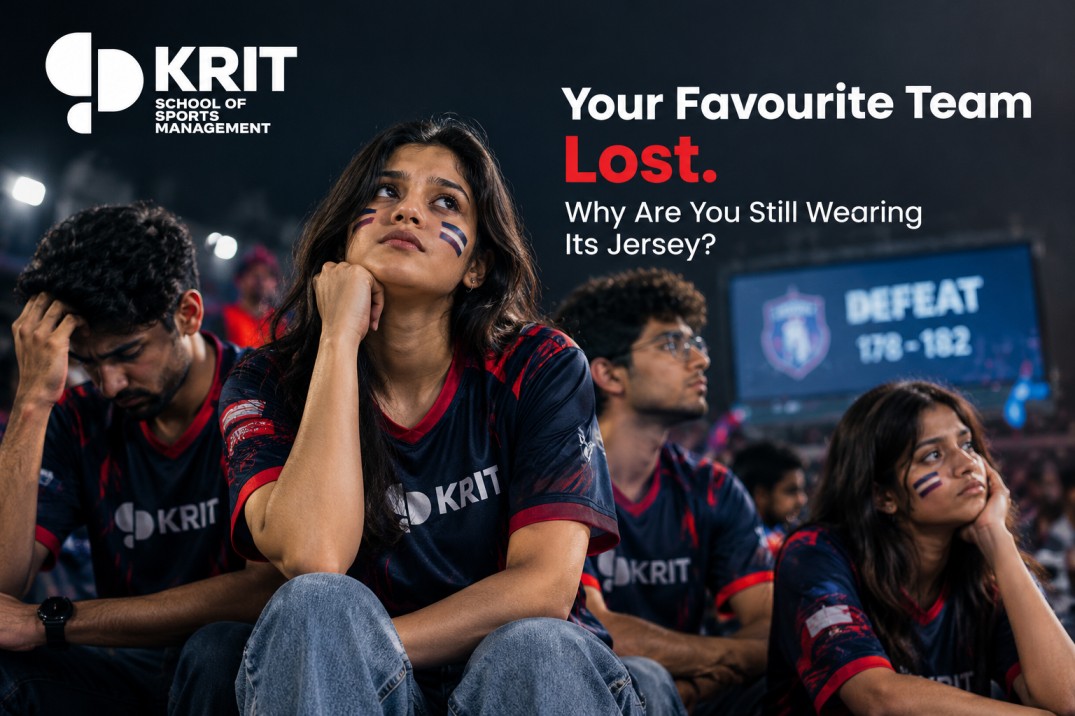
The team lost last night.
The group chats turned into debates. Fans questioned the captain, criticised the tactics and declared they were “done with this team.”
The next morning, they wore the jersey.
For anyone studying brand marketing, that behaviour raises an interesting question. Why do people continue supporting a team that has disappointed them?
The answer offers a useful way to understand sports marketing. A team’s relationship with its supporters grows through identity, memories, rituals and shared experiences. Winning matters, but it is only one part of the connection.
For aspiring sports management professionals, understanding that connection can change how they approach content, sponsorships and events.
The Jersey Is a Statement of Identity
A jersey has a practical function, but its meaning extends beyond the product.
It might represent someone’s hometown, a childhood memory or the team their family has supported for generations. Wearing it tells other people something about who they are.
That makes the jersey a powerful branding lesson.
People can choose brands partly because those choices express something about themselves: their ambition, interests, values or community.
For a student sports event, the question becomes: what would make someone proud to represent it?
A distinctive identity helps, but pride grows through experience. Fair competition, thoughtful organisation and memorable moments give the event’s colours and name something meaningful to represent.
Rituals Make the Relationship Familiar
The lucky shirt. The usual screening spot. The same friends gathering before kick-off.
Sports experiences are filled with rituals.
These repeated behaviours create familiarity and anticipation. They give supporters something to look forward to before the action begins.
For marketers, observing these habits can reveal opportunities that audience demographics alone might miss.
A café could become a gathering point for screenings. A food partner could create a match-day sharing offer. A college tournament could introduce an opening tradition that teams repeat every year.
The strongest idea will depend on the community. It should feel easy to adopt and enjoyable to repeat.
Over time, a simple ritual can become a recognisable part of an event’s identity.
The Audience Helps Build the Brand
A marketing team may create the official campaign, but supporters influence how the event is experienced and remembered.
They share reactions, invent nicknames, celebrate unexpected heroes and turn small moments into stories.
This gives sports marketers a valuable opportunity: invite participation.
For a student tournament, teams could explain the stories behind their names. Supporters could submit chants. Participants could nominate someone whose contribution deserves recognition.
These activities give people a role beyond receiving promotional messages.
They also help organisers discover what the audience finds interesting. A story that feels ordinary to the organising team might mean a great deal to participants.
Good community content often begins with listening closely enough to notice that difference.
Rivalry Gives the Campaign a Story
“Registrations are open” provides information.
“Last year’s finalists meet again” creates a reason to care.
Sports naturally produce tension: a defending champion, an ambitious newcomer, a rematch or a team trying to recover from an early defeat.
These stories can make smaller events compelling without requiring celebrity athletes or large production budgets.
The marketing team needs to uncover the context. Interview participants. Ask what the fixture means to them. Find out what happened last time.
Then communicate that story clearly.
Rivalry should remain respectful and grounded in the competition. Humiliation or personal attacks can damage the experience.
The goal is to help audiences understand what is at stake and why the next match deserves their attention.
Sponsors Need a Useful Role
Imagine two sponsors at the same tournament.
One appears on a backdrop. Another helps provide a shaded recovery space where players can rest between matches.
Both receive visibility. The second also becomes associated with a useful experience.
That distinction can strengthen sponsorship planning.
Before deciding where a logo should appear, ask what the brand can help people do.
A relevant partner might support hydration, equipment, transport or access. The activity should fit the sponsor’s offering and address an audience need.
Students preparing sponsorship proposals can use this approach to develop clearer ideas. Explain the experience, the audience benefit and how the sponsor’s contribution will be recognised and measured.
Loyalty Still Requires Care
The jersey story has an important limit.
Fans may accept defeat because uncertainty belongs to competitive sport. That does not mean they will accept poor treatment indefinitely.
Confusing communication, inaccessible venues or ignored feedback can weaken trust.
For event organisers, this means marketing continues after someone registers.
Are schedules accurate? Are changes communicated promptly? Can participants find help? Does the experience match what the campaign promised?
These details influence what people say afterwards and whether they return.
Loyalty develops through repeated experiences. Organisers need to keep earning it, even when an event already has enthusiastic supporters.
Make the Student Event a Marketing Experiment
A student-led event offers a practical setting to test these ideas.
Choose a question before creating the campaign.
What could make participants feel proud to belong? Which tradition might people repeat? What audience contribution would enrich the story? How could a sponsor improve the experience?
Build an activity around the question, then observe the response.
Did participants share content voluntarily? Did they remember the sponsor’s contribution? Did supporters adopt the event’s language? Did anyone ask about the next edition?
Record the findings alongside registrations, attendance and feedback.
For students at KRIT School of Sports Management, documenting these decisions can turn an event into a useful portfolio case study: the insight, the idea, the execution and the learning.
What Will People Carry Home
A fan’s jersey holds memories of people, places and moments.
One disappointing result rarely explains the entire relationship.
Sports marketers can learn from that depth of connection. Every campaign and event creates an opportunity to give people something meaningful to remember.
Before planning the next promotional post, ask:
When this event ends, what will people still want to be part of?