You’ve probably read ten glossy articles saying sports management is “booming” in India. You’ve also probably read a Reddit thread where someone called it “kind of a mistake.”
Both are partly true, which is exactly why this question is so hard to answer honestly. The Indian sports industry crossed ₹16,000 crore in 2024, yet real professionals on LinkedIn and Reddit report salaries plateauing around ₹12 LPA in certain roles.
So, is sports management a good career in India? By the end of this post, you’ll know exactly where the real opportunity lies, where the risks are, and whether this path fits your specific goals — no sugar-coating, no blind hype.
Why This Question Doesn’t Have a Simple Yes or No
Here’s the uncomfortable truth nobody tells you upfront: sports management in India is not one career. It’s at least five different careers wearing the same label.
Sports tech, franchise operations, sports marketing, athlete management, and sports media each have wildly different growth trajectories. Lumping them together is exactly why online advice feels so contradictory.
One Reddit user, reflecting on their PG diploma in sports management, wrote candidly:
“The sports industry in India, at least on the management side, is in a terrible state… salaries rarely go beyond 12 LPA. Once you hit that level, big hikes barely happen.”
That’s a real, lived experience — not a scare tactic. At the same time, industry data tells a different story for specific verticals.
Where the Honest Disconnect Comes From
Sports tech — data analytics, fan engagement platforms, sports betting-adjacent startups — pays significantly better and grows faster than traditional sports events, marketing, or athlete management roles. The person complaining online was likely in one of the slower-growing verticals, not sports tech.
This is the nuance most “Top 10 Reasons Sports Management Is Great” articles skip entirely.
The Real Data: Sports Management Career Scope in India 2026
Let’s look at what’s actually driving growth, and where it’s slowing down.
What’s genuinely growing:
- IPL revenue exceeds ₹15,000 crore annually, with 10 franchises requiring full business teams
- ISL (13 teams) and PKL (12 teams) have expanded their commercial operations significantly since 2020
- Corporate sports sponsorship spending crossed ₹8,500 crore in 2024, growing 18% year-on-year
- Sports tech and analytics roles are seeing the fastest salary growth in the entire sector
- Government programs like Khelo India are funding structured, long-term sports infrastructure jobs
What’s genuinely struggling:
- Traditional event management and athlete-facing roles show slower salary progression past the 5-year mark
- Many small sports agencies and event companies operate on thin margins, capping what they can pay
- Post-pandemic recovery in live event roles has been uneven and slower than expected
- Entry-level oversupply exists in generic “sports marketing” roles, since many colleges now offer similar courses
Data sources: FICCI-EY Sports Report 2024, Naukri.com job listings (June 2026), LinkedIn India career discussions
Sports Management Career Growth in India — By Vertical
| Vertical | Growth Outlook | Typical Salary Ceiling (10 yrs) |
|---|---|---|
| Sports Tech & Analytics | Strong | ₹25L – ₹50L+ |
| Franchise Operations (IPL/ISL/PKL) | Moderate-Strong | ₹20L – ₹40L |
| Sports Marketing & Sponsorship | Moderate | ₹15L – ₹30L |
| Sports Media & Content | Moderate | ₹18L – ₹35L |
| Event Management | Slower | ₹10L – ₹18L |
| Athlete Management | Slower, niche-dependent | ₹8L – ₹20L |
Trying to figure out which sports vertical actually fits your goals?
Don’t pick a course based on the word “sports” alone. Ask what specific vertical the curriculum focuses on — tech, marketing, operations, or events — before you enroll.
Pros and Cons of a Sports Management Career — Weighed Honestly
You deserve both sides. Here they are, without spin.
The Genuine Advantages
- Faster entry than traditional MBA routes— most PG diplomas take 11 months versus 2 years for a full MBA
- High-growth verticals exist— sports tech and franchise operations are hiring aggressively
- Passion alignment— working in an industry you genuinely care about improves long-term satisfaction, even if pay is moderate
- Low competition in niche specialisations— fewer people specialise deeply in sports law or sports data compared to generic marketing
The Real Disadvantages
- Salary ceilings in traditional roles— event management and generalist marketing roles plateau faster than corporate equivalents
- Market oversupply of generalists— too many students graduate with the same broad “sports management” label and no specialisation
- Job security varies by employer size— small agencies and event companies offer less stability than franchises or established brands
- Slower hikes past mid-career— several professionals report stagnant growth once they cross ₹10–12 LPA in non-tech roles
Is a Bachelor’s Degree in Sports Management Worth It?
It depends heavily on what you do with it. A bachelor’s degree alone, without specialisation or internship experience, often leads to the same generalist trap described above. Paired with a clear specialisation — sports tech, franchise business, or sports law — it becomes genuinely worth the investment.
Sports Management vs Other Careers in India — An Honest Comparison
Here’s how it stacks up against the alternatives students usually consider.
Sports Management vs Regular MBA:
A regular MBA offers broader industry flexibility and typically higher entry salaries (₹8L–₹15L at top colleges). Sports management offers faster, cheaper entry and deeper industry-specific access — but only pays off if you specialise smartly, particularly in growing verticals like sports tech.
Sports Management vs Sports Tech/Analytics Careers:
If your core interest is sports and data or technology, a sports tech specialisation within your management course will consistently outperform generalist sports marketing or event roles in both salary and stability.
Sports Management vs Traditional Corporate Careers:
Corporate roles in finance, IT, or consulting generally offer more predictable salary growth. Sports management offers less predictability but potentially faster access to leadership roles within a smaller, growing industry — if you enter early and specialise.
Considering sports management but want to hedge your bets?
Look for programs that combine core sports business training with a tech or data specialisation. This combination shows the strongest salary resilience across the next decade.
Should You Choose Sports Management? A Practical Decision Framework
Answer these questions honestly before committing.
- Are you drawn to a specific vertical(tech, franchise ops, marketing) — or just “sports” in general? Vague interest leads to generalist outcomes.
- Can you commit to specialising within 1–2 years of starting your career?Generalists plateau faster than specialists.
- Are you comfortable with moderate pay in exchange for doing work you enjoy?Some verticals won’t match corporate salaries even at senior levels.
- Do you have a backup plan or transferable skill set?Sports business skills like marketing and operations do transfer to other industries if needed.
- Have you spoken to actual professionals in your target vertical— not just read course brochures? Real conversations reveal realities that marketing materials don’t.
If you answered confidently on most of these, sports management is very likely a good career fit for you. If you’re unsure on more than two, spend more time researching your specific vertical before enrolling.
[Explore Specialised Sports Management Courses] – Make a Button Here
The Honest Verdict: Is Sports Management a Good Career in India?
Is sports management a good career in India? Yes — but only if you choose your vertical deliberately and specialise early. The blanket answer isn’t yes or no; it depends entirely on whether you enter sports tech and franchise operations, which are genuinely growing, or generalist event and marketing roles, where salaries plateau faster than people expect.
The Indian sports industry is real and expanding, backed by league growth, government investment, and rising sponsorship spending. But it rewards specialists, not generalists who picked the industry for its glamour alone.
Your next step: Talk to at least three working professionals in your target sports vertical before choosing a course. Ask them directly about salary growth after year five — not just their starting package. That one conversation will tell you more than any brochure.
[Speak to a Sports Career Counsellor] – Make a Button Here
Frequently Asked Questions
Is sports management a good career in India?
Yes, for specialists — sports management offers strong career growth in verticals like sports tech, franchise operations, and data analytics. However, generalist roles in events and traditional marketing show slower salary progression after the mid-career point. Your outcome depends heavily on which specific vertical you choose within the broader sports management field.
Is a bachelor’s degree in sports management worth it?
It’s worth it when paired with a clear specialisation and internship experience. A generic sports management degree without focus often leads to oversaturated, slower-growing generalist roles. Students who specialise early in sports tech, franchise business, or sports law consistently report better long-term career outcomes and salary growth.
What are the disadvantages of a career in sports management?
The main disadvantages include salary ceilings in traditional roles like event management and generalist marketing, market oversupply of similarly-trained graduates, and job security that varies significantly by employer size. Several professionals report stagnant hikes once salaries cross ₹10–12 LPA in non-specialised, non-tech verticals of the industry.
Does sports management pay well in India?
It depends on the vertical. Sports tech and franchise operations roles pay well, with senior professionals earning ₹25L–₹50L annually. Traditional event management and generalist marketing roles pay more modestly, often plateauing between ₹10L and ₹18L even at senior levels, making vertical choice the biggest factor in long-term earnings.
Is sports management better than a regular MBA in India?
Sports management is faster and cheaper to complete, with stronger industry-specific access to franchises and sports brands. A regular MBA offers broader flexibility and typically higher entry-level salaries. Sports management wins for sports-specific careers if you specialise smartly; a regular MBA wins for cross-industry flexibility and predictable corporate growth.
Is sports management a dying or growing field in India?
It’s growing overall, but unevenly across verticals. Sports tech, franchise operations, and sports media are expanding rapidly alongside league growth and rising sponsorship spending. Traditional event management and generalist marketing roles are growing more slowly and show more competition. The field isn’t dying — but it does reward specialisation over generalisation.
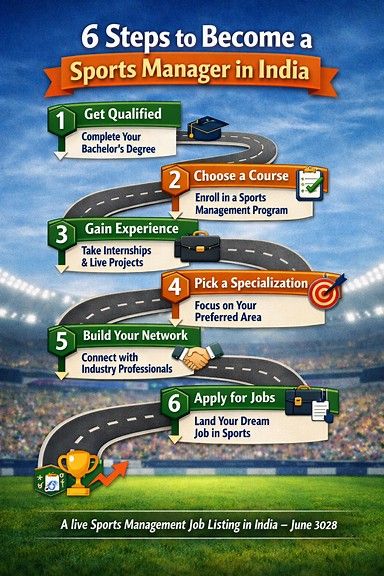
Step 1: Choose Your Entry Qualification
If you’re in Class 12 and certain about sports, apply for a Bachelor of Sports Management (BSM) program. If you’ve already graduated in any stream, a PG diploma in sports management (11 months to 1 year) gets you into the industry faster than starting a fresh undergraduate degree.
Step 2: Pick a Course With Real Industry Exposure
Not all sports management courses are equal. Before enrolling, ask three questions: Who are the placement partners? Do students work on live sports events during the course? Is the program NSDC-affiliated or recognised under Skill India?
Step 3: Get an Internship in Sports Management — Early
This step matters more than your final grades. Reach out to local sports events, franchise offices, or sports marketing agencies in Mumbai and Pune even before your course internship window opens. One real event under your belt beats three case studies on paper.
Step 4: Specialise in One Area
Don’t try to master marketing, operations, law, and media all at once. Pick one — say, sports marketing or event operations — and go deep. Recruiters hire specialists faster than generalists in this industry.
Step 5: Build Your Network Before You Need It
Follow franchise executives, sports agency founders, and federation officials on LinkedIn. Attend sports business events in your city. Most entry-level sports management jobs in India get filled through referrals before they’re even posted publicly.
Step 6: Apply Strategically — Not Just Through Campus Placement
Check Naukri.com, LinkedIn, and company career pages directly. Over 15,000 sports management roles were listed on Naukri in mid-2026 alone. Campus placement is one channel — not your only one.
Ready to start your sports management journey?
Look for a PG diploma or certificate program with guaranteed internship placements and real industry mentors — not just classroom theory. Your first internship often becomes your first job offer.
[Check PG Sports Management Programs Near You] – Make a Button Here
How Long Does It Take to Become a Sports Manager in India?
This depends entirely on your starting point.
After Class 12: 3 years (BSM) + optional 6-month specialisation = roughly 3.5 years to a fully qualified, job-ready profile.
After Graduation: 11 months to 1 year (PG diploma) is often enough to enter the industry, especially if you complete a strong internship during the course.
As a Working Professional: 6 months to 1 year through an executive certificate program, especially if you already have transferable skills from marketing, events, or operations roles.
Most students underestimate one thing: the internship phase often takes as long as the coursework itself to do properly. Budget time for it — don’t rush this part.
What Salary Can You Expect Once You Qualify?
Entry-level sports managers in India typically start at ₹3L–₹6L per annum. With 3–6 years of experience in specialised roles like sports marketing or franchise operations, salaries climb to ₹6L–₹14L. Senior sports management professionals with 8+ years of experience can earn ₹20L–₹60L+ depending on the organisation and role.
The Bottom Line on Becoming a Sports Manager in India
Learning how to become a sports manager in India isn’t complicated once you break it into steps — choose the right qualification, build real skills, intern early, specialise, and network before you need to. The path is shorter than most people assume, especially through a focused PG diploma route.
What actually separates successful sports managers from the rest isn’t luck or connections from birth. It’s the internship they took seriously and the specialisation they built early. Start there, and the job offers follow.
Your next step: Compare BSM, PG diploma, and executive certificate programs based on their placement records and internship partnerships — not just their brochures. Talk to alumni working in the field before you commit.
[Apply for Sports Management Programs — 2026 Intake] – Make a Button Here
Frequently Asked Questions
What qualifications do I need to become a sports manager in India?
You need either a Bachelor of Sports Management after Class 12, or a PG diploma/master’s in sports management after graduation in any stream. Working professionals can also enter through executive certificate programs. What matters more than the exact qualification is choosing a course with strong internship placements and real industry exposure.
Can I become a sports manager after 12th in India?
Yes, you can start immediately after Class 12 through a Bachelor of Sports Management (BSM) program, which typically requires 45% marks in any stream. This 3-year undergraduate route works well if you already know sports is the career you want, rather than exploring other options first.
What skills does a sports manager need to succeed?
A sports manager needs both hard skills — sports marketing, event operations, basic contract knowledge, and data literacy — and soft skills like communication, negotiation, and leadership. Most successful sports managers build these through hands-on internships and live event experience, not classroom learning alone.
How many years does it take to become a sports manager in India?
It takes roughly 3 to 3.5 years starting after Class 12 through a BSM program, or just 11 months to 1 year if you enter through a PG diploma after graduation. Working professionals can transition in 6 months to 1 year through an executive certificate, depending on prior experience.
How do I get an internship in sports management in India?
Start by reaching out directly to local sports events, franchise offices, and sports marketing agencies in your city, rather than waiting for your course to arrange one. Build a LinkedIn profile showing genuine interest in sports business, and apply to internships during IPL, ISL, or PKL seasons when hiring activity peaks.
What salary can I expect after qualifying as a sports manager?
Entry-level sports managers in India typically earn ₹3L–₹6L per annum right after qualifying. With 3–6 years of specialised experience, salaries rise to ₹6L–₹14L, and senior professionals with 8+ years in franchise or marketing leadership roles can earn ₹20L–₹60L annually, depending on the organisation.